
The Curious Case of ... Inflammation
In 1858, a man in Berlin looked through a microscope and thought he had figured out disease. Like, all of the diseases.
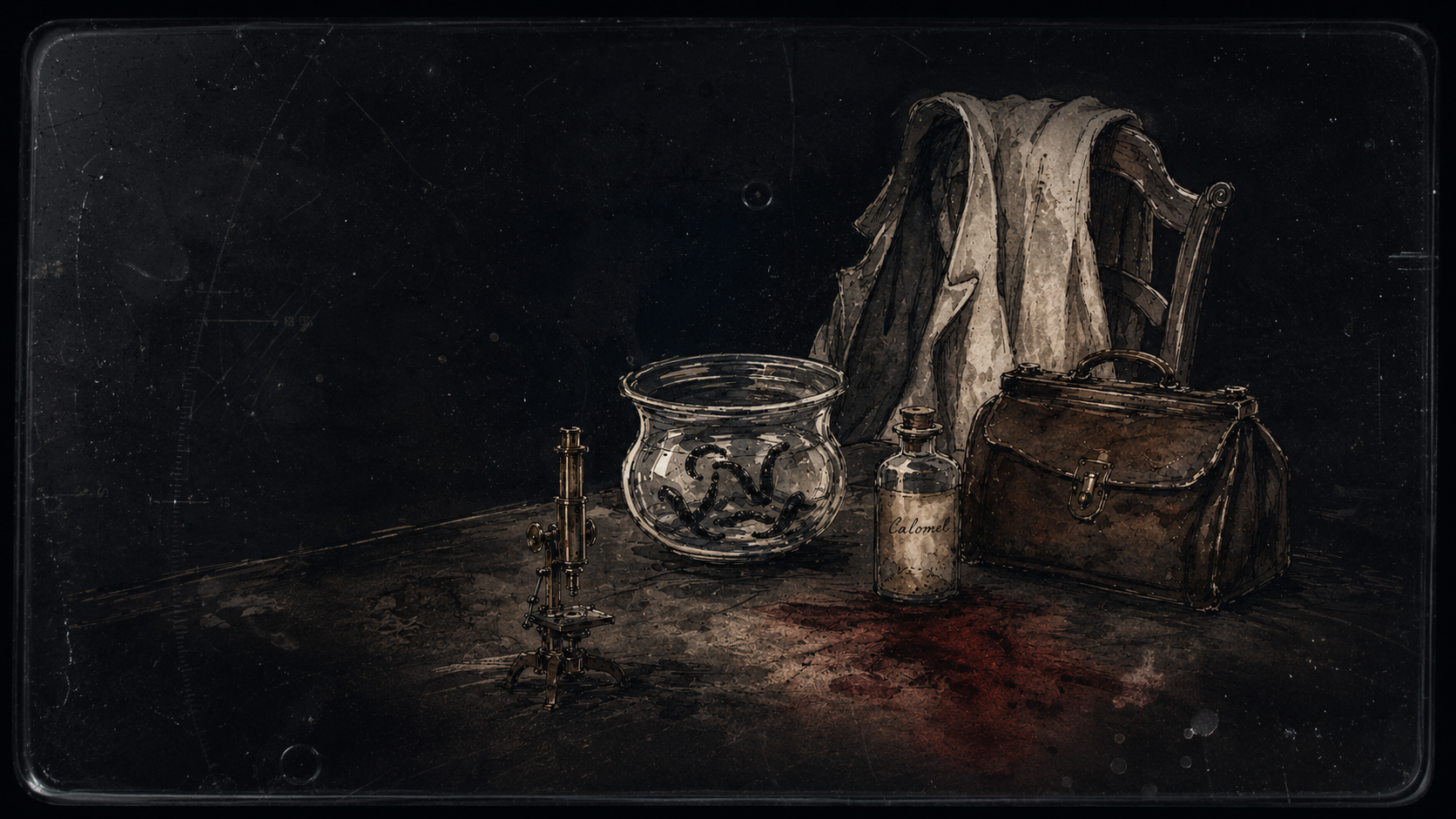
He was thirty-seven years old, his name was Rudolf Virchow, and the book he published that year, Cellular Pathology, founded modern medicine. You have to understand the field he was working in. A generation earlier, doctors had still been bleeding patients with leeches to balance the humors. Cholera was treated with calomel, a mercury compound that mostly poisoned you on the way to whatever else was going to kill you. The germ theory of disease was twenty years away from being settled. People went to the hospital to die there a little more comfortably than at home.
Into this, Virchow brought a microscope and an idea. Every cell, he said, comes from another cell. Disease is what happens when cells go wrong. You can put it under a lens and watch it. Redness, swelling, the heat of an infected wound, was a cellular phenomenon. The cells were responding to injury. The body was defending itself.
This was a stunning intellectual achievement. It was also stunningly incomplete. Not the cellular part. Virchow had that right. The trouble was the frame he built around it.
Virchow's picture made inflammation the body's response to disease. Something causes harm, the cells respond, inflammation. Treat the cause and the inflammation resolves itself. This is intuitive. It matches everyday life. Cut your finger, watch it puff up, watch it heal. And for that kind of inflammation, the acute kind, the body answering an actual injury, the picture is simply correct. Virchow was right about the fire he could see.
His error, which the world would cling to for the better part of two centuries, was assuming it was the only fire there was. That inflammation was always a response, always downstream, always secondary. It was the result of the "real problem."
The fire he watched on the slide was real. It was just one kind of fire.
The reason it took 168 years to work out the others is that the reframe required tools and concepts nobody yet had. Virchow couldn't see cytokines. He had no way to study the brain's immune cells, because nobody had identified them. The idea that inflammation could be silently smoldering for forty years inside an artery, or written into the regulatory layer of a stem cell's genome, would have been not just unprovable but unthinkable.
So the field inherited his framing. And it kept the framing for most of the time between his microscope and our microscopes, which is to say, until very recently. The story of how it started letting that framing go is the curious case.
It involves a Russian zoologist on a beach, a generation of surprisingly effective drugs, a heretical cardiologist, a permeable wall around the brain that turned out not to be a wall, and, in the last couple of years, a Nobel-bait suggestion that the body can remember an inflammatory fire and hand the memory down to cells that were never there for it.
It also involves a class of weight-loss drugs that started doing something nobody predicted. We'll get to those at the end. Pretend you don't know about them yet. In 1858, you wouldn't.
A century of waving the right hand
For about a hundred and twenty years after Virchow, inflammation is what happens because of disease. It is not what disease is.
The work done inside this framing was not bad work. In 1882, on a beach in Sicily, a Russian zoologist named Élie Metchnikoff pushed a rose thorn into the body of a starfish larva and watched the cells of the larva crawl toward the thorn and engulf it. He coined the word phagocytosis. He had identified the first mechanism of cellular immunity. He won a Nobel Prize for it twenty-six years later. Everything he saw was real, and it still is. There was a real thorn. The cells really were crawling toward a real injury. This is the responsive fire, inflammation doing exactly the job Virchow said it did, caught in the act. The trouble was never what Metchnikoff saw. The trouble was that it fit the frame so perfectly it seemed to prove the frame held everywhere. A thorn, a response, a defense. What else would inflammation ever be?
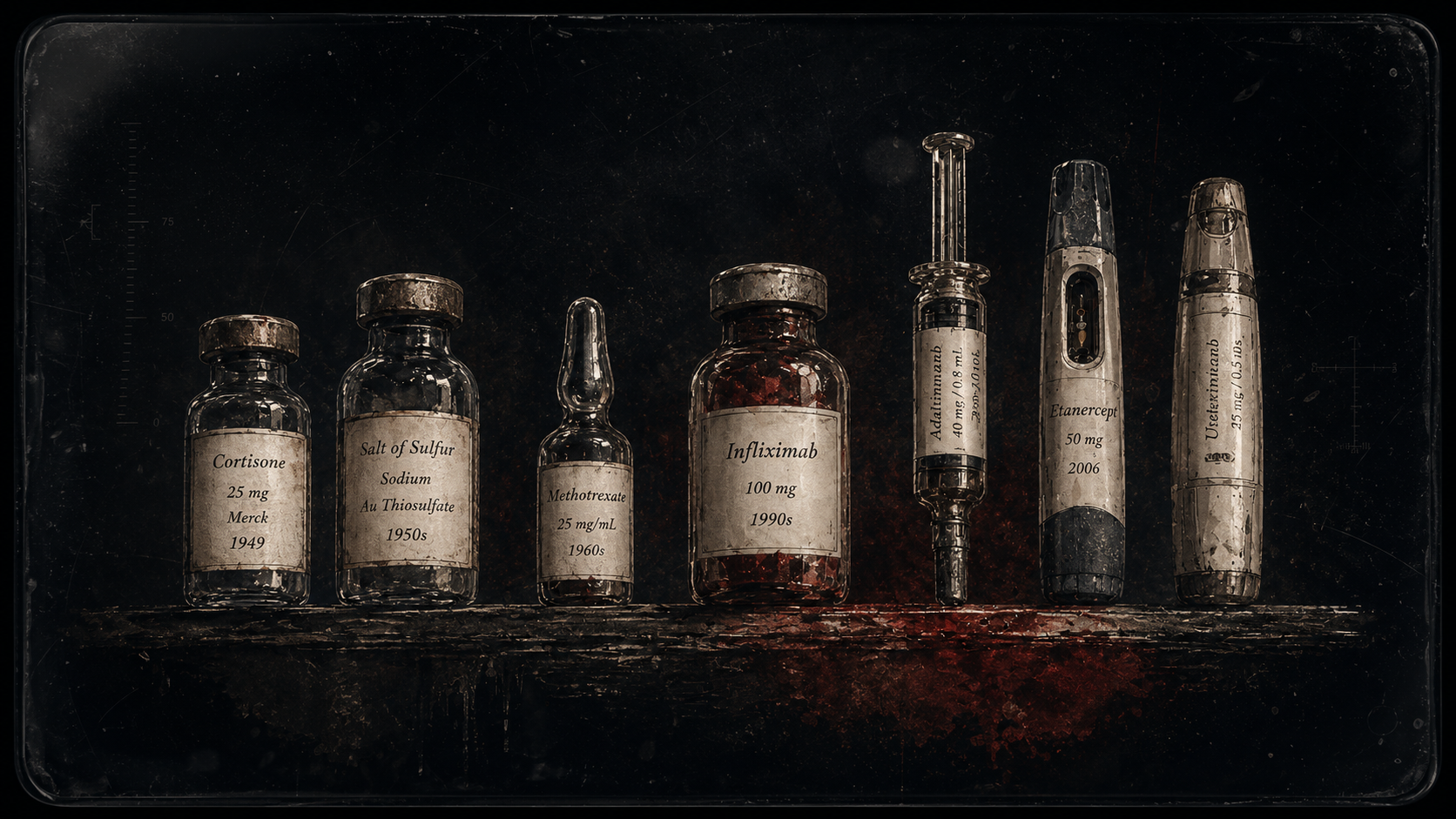
The late 19th century brought aspirin, the first generation of anti-inflammatory drugs, and a great deal of relief from rheumatic pain. Nobody seriously asked whether the inflammation itself might be the disease, because nobody had a reason to. In 1949, a team at the Mayo Clinic gave cortisone to a woman with crippling rheumatoid arthritis and watched her walk out of the hospital. They won the Nobel Prize the next year, which, you start to notice, is a thing that happens often in this story. The framing worked. The drug suppressed the response, the misfiring response was the problem, the response was downstream of something.
If you just glossed over the word "misfiring," stop. Rewind. The first hairline crack in the accepted wisdom is hiding in it. A response that misfires has nothing to respond to. There is no thorn in a rheumatoid joint. The body is attacking itself, and no one could point to the cause it was supposedly answering. Nobody in 1949 quite said the obvious thing. The fire in that woman's joints was not a response to her disease. It was her disease. The frame had begun to strain decades before it broke.
What's missing across this whole stretch is anybody seriously entertaining the idea that the inflammation, persisting at low levels for years, might be the disease. Acute inflammation made sense. Chronic inflammation, as a category that mattered, barely existed. If your knee was warm and swollen, you had arthritis and the inflammation came with it. If your arteries were silently inflamed for forty years before they killed you, nobody was looking. There was no microscope yet that would have shown them anything if they had.
The wry note here is that the field wasn't asleep. It was working with the tools it had, and those tools could resolve the inflammation you could see while the slow kind stayed beneath their reach. The deeper picture went unseen for the better part of those hundred and twenty years. The people inside the field were confident, their confidence was reasonable, and they were wrong about the part that mattered most.
The cytokine revolution: the crack deepens
Sometime in the 1980s, the story began to give way. The decade brought the discovery and characterization of cytokines, which sounds technical and dull until you understand what it meant. Cytokines are signaling molecules. They are how cells talk to each other across distances: the interleukins, tumor necrosis factor, the interferons. What the cytokine work revealed is that inflammation is not a cellular cleanup operation. It is a conversation. Cells are talking to each other in inflammatory dialect, and the conversation can persist long after whatever started it has gone.
The pivot moment, the one where the old framing started to break, came when researchers identified TNF-alpha and built drugs to block it. Etanercept and infliximab arrived in the late 1990s. You could now take a single cytokine, switch it off, and watch rheumatoid arthritis go into remission. The drug did not suppress a response. It interrupted a signal. The implication, which many in the scientific community were slow to absorb, was that the signal itself was doing the disease. Here was a fire that no thorn had set. The immune system was lighting it on its own and feeding it. And the way to put out that fires was to cut off a single line of fuel, one cytokine out of many. Inflammation here was not answering a disease. It was the disease, burning on its own and entirely capable of keeping itself alight.
That was one way the old frame failed: a fire with no thorn behind it. Cardiology was about to expose another, and this one was sneakier, because here there really was something else going on underneath.
You already know the cartoon. Cholesterol clogs the artery the way grease clogs a kitchen pipe, slowly, mechanically, until one day the pipe closes and that's the heart attack. Plumbing. It's the picture every diagram in every doctor's office has put in your head, and it is the picture Russell Ross spent his career complicating.
In 1986 Ross, a pathologist, proposed that atherosclerosis was not fundamentally a plumbing problem at all but an inflammatory disease. After all, atherosclerotic plaques were full of immune cells. The pipes, he was saying, were on fire, and the fire was the thing.
Ross was not taken seriously. The idea that heart disease was an immune problem struck the field as a category error, the kind of thing you'd expect from someone who'd wandered out of his lane. Cardiology knew what atherosclerosis was. It was plumbing. Everyone could see the cholesterol in the artery; you could practically scrape it out. A pathologist talking about inflammation was solving a problem that, as far as the field was concerned, had already been solved.
It took until 2017 to settle the question. Paul Ridker and colleagues ran a trial called CANTOS in which they gave canakinumab, a drug that blocks a single inflammatory cytokine, to patients who had survived a heart attack. Cardiovascular events fell. The drug did nothing to cholesterol. Whatever was being prevented was being prevented through inflammation alone. Russell Ross had been right for thirty-one years, and the field finally caught up.
And this was a different relationship again. In the artery, there really was something else going on. Cholesterol, plaque, the slow furring of the pipe: the old plumbing story was not imaginary. But the fire was not just resting on top of the plumbing as a symptom of it. The fire was driving the damage. Whatever had lit it, the inflammation itself had become the thing that brought the wall down. Block it alone, leave the cholesterol untouched, and people stopped having heart attacks.
By 2017, inflammation had been promoted from "downstream symptom" to "primary driver" in at least one major disease category. The dam was not broken yet. But it was leaking from several places at once.
The brain, supposedly behind a wall
You might have noticed that everything we've discussed so far happens below the neck.
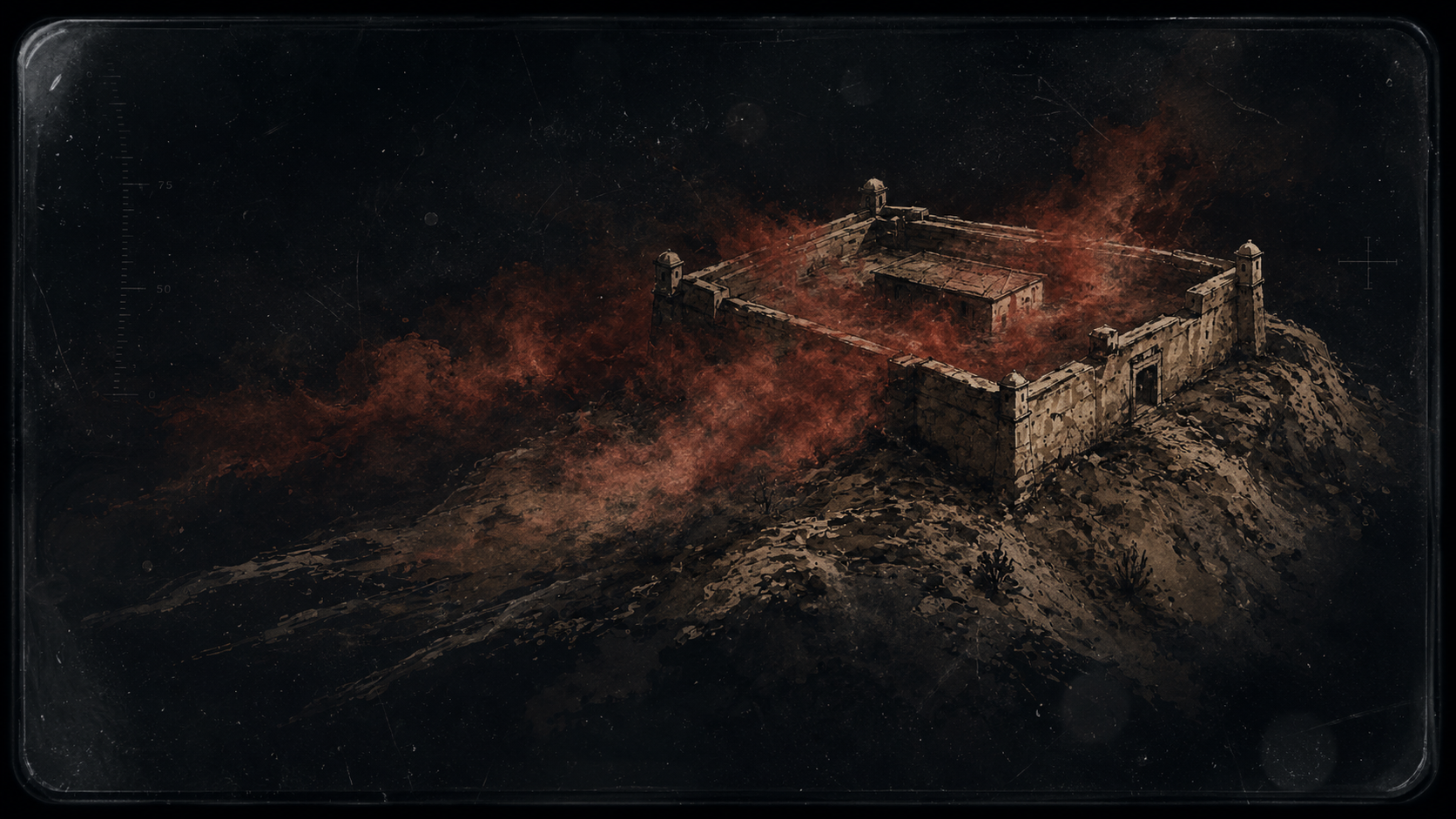
This is because for most of the 20th century the brain was considered immune-privileged. The blood-brain barrier was supposed to be a wall, keeping the body's inflammatory weather out of the delicate machinery of the central nervous system. Microglia, the brain's immune cells, were known about and treated as housekeeping. The brain was a citadel. Whatever was happening in your arteries and joints stayed there.
This picture started collapsing in the late 1990s and accelerated through the 2010s, and the collapse is one of the more interesting reframes in modern science. Microglia turned out to be far more active than anyone had realized. They sculpt synapses during development. They respond to systemic signals throughout life. They behave badly in neurodegenerative disease. The blood-brain barrier turned out to be more of a filter than a wall, and the filter let more through than the textbooks said, particularly when chronic systemic inflammation was around.
The phenomenon clinicians had been seeing for decades got a name: sickness behavior. When you have the flu, you don't just feel ill. You withdraw. You sleep more. You lose interest in food and sex and conversation. Robert Dantzer and colleagues showed in a 2008 review that this is a coherent neuroimmune program, driven by inflammatory cytokines acting on the brain, evolutionarily ancient, and almost indistinguishable, in some of its features, from depression.
Andrew Miller, Charles Raison, and Jennifer Felger built the case across the next decade. A substantial subset of depression looks inflammatory. Anti-inflammatory drugs, in some trials, produce antidepressant effects. The serotonin story that dominated psychiatry for a generation, the one that justified the chemical-imbalance pharmaceutical advertisements your parents watched on television, got quietly supplemented and in some quarters replaced. Depression, sometimes, is an inflammatory illness. The chemical imbalance was the wrong chemicals.
This is a big deal. The body's slow fire was reaching the brain, and the brain was burning along with everything else. Whatever inflammation does in the joints and arteries, it is also doing in the cells that produce thought, mood, and motivation. The citadel was a leaky filter. It always had been.
The very recent stuff
In 2025, Harvard neuroimmunologists Francisco Quintana and Michael Wheeler published a paper in Nature on how psychedelics act on a neuroimmune circuit that governs fear. The finding is narrow and thrilling.
Chronic stress recruits inflammatory immune cells to the membranes around the brain. Those cells drive a pro-inflammatory cascade in the amygdala, the brain's fear hub, normally held in check by a kind of molecular brake on the support cells, the astrocytes. When the brake comes off, fear intensifies. Psychedelic compounds, in this work, act on that exact circuit. No one is saying that psychedelics are a general anti-inflammatory. It is something more specific, and for our purposes more interesting: a mapped mechanism by which a single intervention reaches the precise junction where inflammation and emotion are wired into each other. It's early, and mostly in mice, but the mechanism is real.
In 2026, a paper in Nature reported inflammatory memory in the blood-forming stem cells of the human body. These are the cells in your bone marrow that manufacture your entire blood and immune system, around three million cells a second, for as long as you live. The finding is that a subset of them keeps a molecular memory of past inflammation. After the episode that caused it has resolved, these cells carry a durable imprint of it, written into the regulatory machinery of the cell, and they can pass that inflammatory program forward to the immune cells they later produce. And it shows up in people, not only in models. The memory program is elevated in the stem cells of patients recovering from severe COVID, in sickle cell disease, and with ordinary ageing, and higher levels of it track with higher all-cause mortality across large population datasets.
Sit with this for a second. It means inflammation is not only a state you are in. It is something the body can remember, and hand down to its own cell lineages. The cells doing the remembering are quiet rather than frantic, which is part of why the effect went unseen for so long. They sit still and hold the imprint. What the memory resembles, the authors note, is less the "trained immunity" the field has described in vaccines and more the machinery of T-cell memory, the same system that lets the body remember a pathogen for a lifetime. The body, it seems, may remember an old fire with something close to the tools it uses to remember an old infection.
The reframe these two papers point toward is one the field is still digesting. Inflammation, taken together, is a state, and a signal, and now apparently a memory, and some of the most interesting interventions, including some forms of psychedelic-assisted therapy, may act on the wiring rather than only on the symptom. This is genuinely live science. Confident summary is premature.
Both of these papers are months old as I write this, one of them days old. Watch what replicates. Watch what gets revised. The story of inflammation has been rewritten in major ways three or four times in the last forty years, and the next rewrite is almost certainly already underway.
And now the weight-loss drugs
Now we can come back to where you came in.
A few years ago, a class of drugs called GLP-1 agonists, developed for type 2 diabetes, started doing something nobody had prescribed them for. People lost weight, dramatically. Then the trials began turning up things further afield. Cardiovascular events dropped. Kidney disease slowed. C-reactive protein, the workhorse marker of systemic inflammation, fell sharply across the major weight-management trials. The mechanism turned out to involve direct anti-inflammatory effects in the central nervous system, mediated by GLP-1 receptors that nobody had been paying much attention to.
The headlines went to the weight loss. The interesting story is that we have apparently been giving people, for the wrong reasons, a drug that quiets a fire most of them didn't know was burning. The drug is the latest accidental teacher in a line of accidental teachers stretching back to the cortisone injections in 1949. Each one revealed, slightly more, that inflammation was not the symptom we thought.
What the line keeps suggesting is that the body has been on fire in a sense for far longer than anyone was able to see. And the fire comes in more than one kind. Sometimes it is set by an injury, the thorn in the starfish, the cut on the finger, and then it is exactly the response Virchow described, downstream and secondary and resolving on its own. Sometimes it starts itself, with no thorn anywhere, the body burning its own tissue for reasons it will not give up. And sometimes the fire, whatever lit it, becomes the thing that burns the house down, the driver of the catastrophe and not its smoke. For a hundred and sixty-eight years the field could see clearly only the first kind. The whole modern story is the slow discovery of the other two. We are not finished discovering.
Virchow was not wrong that inflammation is cellular. He was right about that, and right about the one fire he could see. His mistake was the size of it. He took the single kind of fire in front of him for the whole of what fire could be. Science has spent a hundred and sixty-eight years finding the kinds he missed, and it shows no sign of having found the last of them.
The Nāhua position is that this is a reasonable basis for taking inflammation seriously without claiming the picture is finished, and for being suspicious of anyone who tells you they have it figured out. The story has been revised every few decades since 1858 and far faster since 2024. We should act on what looks robust, stay ready to update, and keep an eye on what the next accidental teacher reveals.
The man at the microscope in Berlin in 1858 was a genius, and he was about to be incompletely wrong for a very long time. We are probably also incompletely wrong about something right now, and we don't yet know which thing. That's the curious case. It will stay curious for a while yet.
References
Chung, Elizabeth N., Jinsu Lee, Carolina M. Polonio, et al. 2025. "Psychedelic Control of Neuroimmune Interactions Governing Fear." Nature 641 (8065): 1276–86.
Dantzer, Robert, Jason C. O'Connor, Gregory G. Freund, Rodney W. Johnson, and Keith W. Kelley. 2008. "From Inflammation to Sickness and Depression: When the Immune System Subjugates the Brain." Nature Reviews Neuroscience 9 (1): 46–56.
Drucker, Daniel J. 2024. "The Benefits of GLP-1 Drugs Beyond Obesity." Science 385 (6706): 258–60.
Felger, Jennifer C., and Michael T. Treadway. 2017. "Inflammation Effects on Motivation and Motor Activity: Role of Dopamine." Neuropsychopharmacology 42 (1): 216–41.
Hench, Philip S., Edward C. Kendall, Charles H. Slocumb, and Howard F. Polley. 1949. "The Effect of a Hormone of the Adrenal Cortex (17-Hydroxy-11-Dehydrocorticosterone; Compound E) and of Pituitary Adrenocorticotropic Hormone on Rheumatoid Arthritis." Proceedings of the Staff Meetings of the Mayo Clinic 24 (8): 181–97.
Miller, Andrew H., and Charles L. Raison. 2016. "The Role of Inflammation in Depression: From Evolutionary Imperative to Modern Treatment Target." Nature Reviews Immunology 16 (1): 22–34.
Ridker, Paul M., Brendan M. Everett, Tom Thuren, et al. 2017. "Antiinflammatory Therapy with Canakinumab for Atherosclerotic Disease." New England Journal of Medicine 377 (12): 1119–31.
Ross, Russell. 1999. "Atherosclerosis: An Inflammatory Disease." New England Journal of Medicine 340 (2): 115–26.
Schultz, Myron. 2008. "Rudolf Virchow." Emerging Infectious Diseases 14 (9): 1480–81.
Tauber, Alfred I., and Leon Chernyak. 1991. Metchnikoff and the Origins of Immunology: From Metaphor to Theory. New York: Oxford University Press.
Verma, Subodh, Meena Bhatta, Melanie Davies, et al. 2023. "Effects of Once-Weekly Semaglutide 2.4 Mg on C-Reactive Protein in Adults with Overweight or Obesity (STEP 1, 2, and 3): Exploratory Analyses of Three Randomised, Double-Blind, Placebo-Controlled, Phase 3 Trials." eClinicalMedicine 55 (January): 101737.
Virchow, Rudolf. 1858. Die Cellularpathologie in ihrer Begründung auf physiologische und pathologische Gewebelehre. Berlin: August Hirschwald.
Wong, Chi Kin, Brent A. McLean, Laurie L. Baggio, et al. 2024. "Central Glucagon-like Peptide 1 Receptor Activation Inhibits Toll-like Receptor Agonist-Induced Inflammation." Cell Metabolism 36 (1): 130–143.e5.
Zeng, Andy G. X., Murtaza S. Nagree, Niels Asger Jakobsen, et al. 2026. "Human Haematopoietic Stem Cells Remember Inflammatory Stress." Nature, May 27, 1–10.

Essays on treatment resistance, altered states, and the conditions under which change becomes possible.
Subscribe